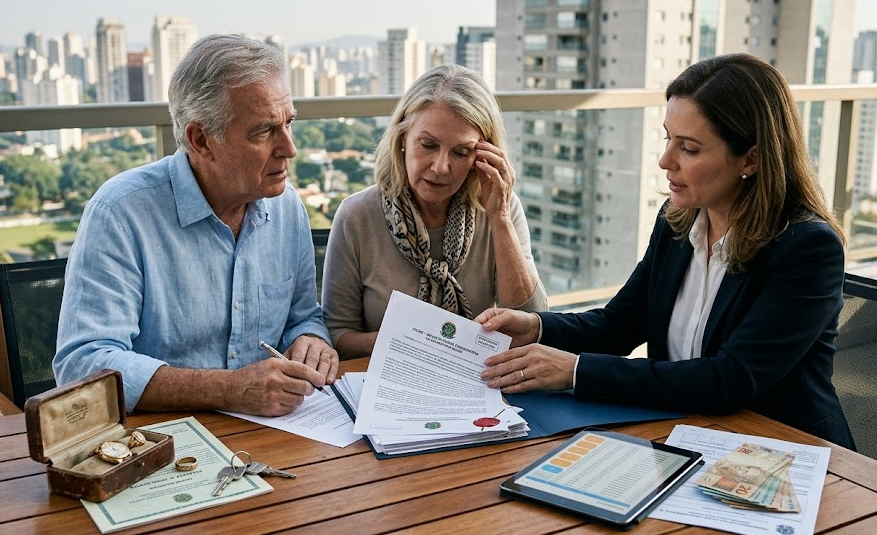
Foreign nationals seeking to establish long-term residence in Brazil must navigate a complex immigration framework offering multiple visa pathways accommodating different circumstances: employment, investment, family reunification, and retirement.
Understanding visa categories, application procedures, and legal implications of residency classification is essential for successful immigration planning.
This comprehensive guide explains Brazilian residency options, eligibility requirements, application processes, and strategic considerations for obtaining lawful Brazilian residence.

Overview: Brazilian Visa Categories and Residency Framework
Brazilian immigration law establishes multiple visa categories accommodating diverse circumstances, with each category offering distinct eligibility requirements, validity periods, and rights and obligations. The National Immigration Authority (Polícia Federal) administers visa issuance and residency registration for foreign nationals seeking Brazilian residence.
Temporary visas authorize foreign nationals to reside in Brazil for defined periods (typically one to five years) and are suitable for professionals on work assignments, students pursuing education, and individuals on intermediate immigration pathways.
Temporary visas require periodic renewal and do not guarantee permanent residence establishment or eventual naturalization eligibility.
Permanent residency visas authorize indefinite Brazilian residence without periodic renewal requirements and serve as the final immigration status before eventual naturalization. Permanent residency qualification is more stringent than temporary visa requirements and typically involves demonstrating successful integration into Brazilian society, financial self-sufficiency, and absence of security concerns.
The Registro Nacional de Estrangeiro (RNE) is the official identification card issued to foreign residents, functioning as primary identification document and proof of lawful immigration status.
The RNE is essential for employment authorization, bank account opening, tax registration, and numerous administrative procedures requiring proof of legal residency.
Temporary Residency Visas: Categories and Eligibility
Temporary residency visas serve as primary immigration pathways for most foreign nationals initially entering Brazil. Understanding different temporary visa categories enables selection of the most appropriate visa category based on individual circumstances and immigration objectives.
The temporary employment visa (visto temporário para atividade remunerada) authorizes foreign nationals to work in Brazil under contractual arrangements with Brazilian employers. Employment visa eligibility requires a job offer from a Brazilian company, employment contract approval by the Ministry of Labor, and employer sponsorship of the visa application. Validity periods typically extend two years with potential renewal for additional two-year terms.
Investors and business owners qualify for the temporary investor visa (visto temporário para investidor estrangeiro) by demonstrating investment in Brazilian business activities meeting minimum capital thresholds. Investor visa requirements typically include USD 50,000-USD 150,000 capital investment in registered business entities, evidence of business viability, and demonstration of job creation. Investor visas authorize direct business ownership and entrepreneurial activities without requiring separate employment authorization.
The temporary family visa (visto temporário para reunião familiar) accommodates foreign nationals with Brazilian family members including spouses, children, and dependent relatives. Family visa eligibility requires proof of family relationship through official documentation and often requires Brazilian sponsors guaranteeing the foreigner’s financial self-sufficiency. Family visas typically extend three years with renewal possibilities.
The temporary student visa (visto temporário para estudante) authorizes enrollment in Brazilian educational institutions. Student visa eligibility requires enrollment in accredited institutions, proof of educational background, and demonstration of financial capacity supporting educational expenses. Student visas typically extend for the educational program duration plus reasonable time for degree completion.
The temporary independent professional visa (visto temporário para atividade independente) accommodates self-employed professionals including consultants, contractors, and service providers. This visa category requires proof of professional qualifications, evidence of client relationships generating income, and demonstration of financial sustainability.
Permanent Residency: Pathways and Requirements
Permanent residency qualification offers the most secure immigration status and opens pathways toward eventual naturalization and Brazilian citizenship. However, permanent residency qualification requires demonstrating substantial Brazilian ties and successful integration into Brazilian society.
The traditional permanent residency pathway requires continuous temporary residency for four consecutive years demonstrating successful Brazilian integration. After the four-year temporary period, eligible applicants may apply for permanent residency conversion, which typically involves National Immigration Authority investigation confirming absence of security concerns and successful integration indicators.
The accelerated permanent residency pathway for investors and business owners permits permanent residency application after two years of temporary investor residency, provided the applicant maintains active business operations, employment generation, and demonstrated business success. This accelerated pathway incentivizes foreign investment by reducing residency establishment timelines.
The permanent residency pathway for family members requires longer Brazilian residence timelines. Foreign spouses and registered civil union partners of Brazilian citizens may qualify for permanent residency after three years of temporary family residence, provided the relationship remains valid and the Brazilian sponsor maintains financial responsibility.
The permanent residency pathway for retirees requires demonstration of sustained retirement income meeting Brazilian government thresholds. Retirement visa holders typically must evidence monthly income of approximately USD 2,000-USD 3,000, adjusted annually for inflation. After three years of retirement residency, eligible applicants may apply for permanent status.
The permanent residency pathway for former Brazilian citizens (returning nationals) applies to individuals who previously held Brazilian citizenship through birth or naturalization and seek to restore resident status. Former citizens may reacquire permanent residency without the lengthy temporary residency periods required of typical foreign applicants.
Investor and Business Owner Visa: Detailed Requirements
The investor visa category offers particularly attractive immigration pathways for foreign entrepreneurs establishing Brazilian business operations. Understanding specific investor visa requirements enables strategic business planning integrating immigration objectives with business development.
Investor visa eligibility requires minimum capital investment in Brazilian business entities registered with the National Registry of Legal Entities (Cadastro Nacional da Pessoa Jurídica—CNPJ). Capital requirements vary depending on business sector, geographic location, and employment generation: standard minimum investment thresholds range from USD 50,000 to USD 150,000, with agricultural, tourism, and economically disadvantaged region investments sometimes qualifying with lower thresholds.
Investment verification requires documenting capital contribution through official bank transfers to the Brazilian business entity, with funds recorded in corporate accounting records. Capital must remain invested in the business entity and cannot be immediately withdrawn, as the National Immigration Authority investigates capital origin and confirms genuine business investment.
Business viability demonstration requires submission of detailed business plans describing operational activities, market analysis, competitive positioning, and five-year financial projections. National Immigration Authority officials evaluate business plans assessing realistic revenue generation potential and employment creation capacity.
Employment generation expectations typically require demonstrating creation of direct employment for Brazilian workers. Authorities generally expect employment of a minimum number of Brazilian residents proportional to business size and investment magnitude. Specific employment thresholds vary by business sector and location, but typical expectations range from 1-5 Brazilian employees for modest investments.
Investor visa holders authorize active business participation and management. Unlike some immigration systems limiting investor involvement, Brazilian investor visas expressly permit active business ownership, operational decision-making, and income generation through business operations. This authorization distinguishes the Brazilian investor visa from purely passive investment visa categories available in other jurisdictions.
Periodic investor visa renewal requires demonstrating continued business operation, capital maintenance, and compliance with established investor commitments. Renewal applications require updated business documentation, financial statements, and evidence of sustained operations.
Retirement Visa: Income Requirements and Procedures
The retirement visa (visto para aposentado or visto para pessoa com renda provinda do exterior) accommodates foreign nationals with sustained retirement income or overseas investment returns. Retirement visa offers attractive immigration pathways for individuals seeking Brazilian residence without employment or business establishment.
Income requirement compliance requires demonstrating monthly sustained income meeting Brazilian government thresholds, typically approximately USD 2,000-USD 3,000 monthly, adjusted annually for inflation. Income documentation requirements include official pension statements from government agencies, investment account statements, rental income documentation, or other evidence of sustained overseas revenue.
Income source verification involves submission of notarized English-to-Portuguese translations of financial documentation, bank statements covering recent months, and letters from financial institutions confirming income patterns. Additionally, foreign applicants must demonstrate that income sources are sustainable and will continue throughout retirement.
Currency conversion and exchange documentation presents practical considerations. Brazilian authorities require documentation of currency conversion rates applied to foreign-source income converted to Brazilian reais. Official Central Bank of Brazil exchange rates must be utilized for conversion rate documentation.
Bank account establishment frequently precedes retirement visa application, as applicants must demonstrate receipt of retirement income in Brazilian bank accounts. Opening Brazilian bank accounts as non-residents proves challenging; many banks require existing residency or Brazilian tax registration. Accordingly, many retirement applicants establish temporary residence first (through temporary visitor extensions) before converting to retirement visa status.
Tax implications of retirement visa status require careful consideration. Retirement visa holders typically achieve Brazilian tax residency status, triggering reporting requirements for worldwide retirement income and wealth. Additionally, Brazil maintains tax treaties with most countries limiting double taxation on retirement income, though compliance complexity requires professional tax guidance.
Retirement visa validity typically extends five years with renewal possibilities based on continued income demonstration. Retirement visa holders may subsequently qualify for permanent residency after three years of continuous retirement residence.
Family Reunification Visa: Spousal, Partnership, and Dependent Pathways
The family visa category accommodates foreign nationals with Brazilian family relationships, offering straightforward immigration pathways for individuals with Brazilian spouses, registered civil partners, and dependent family members. Understanding family visa mechanics enables strategic immigration planning for internationally-separated families.
Spousal visa eligibility requires official marriage documentation establishing valid marital relationship with Brazilian citizen or permanent resident. Marriage documentation must comply with Brazilian legal requirements, including official marriage certificate, authentication through appropriate government agencies, and apostille certification for documents originating in countries party to the Hague Apostille Convention.
Registered civil union visas extend family reunification pathways to unmarried couples. Brazilian law recognizes registered civil unions (união estável) between same-sex and opposite-sex couples meeting specific criteria. Registered civil union visa eligibility requires official civil union documentation, relationship duration evidence (typically minimum two years cohabitation), and government registration of the civil union with appropriate authorities.
Dependent child visas accommodate minor children of Brazilian citizens or permanent residents. Child visa eligibility requires proof of parent-child relationship through official birth certificates and parental custody or guardianship documentation. Children typically maintain dependent visa status until reaching age eighteen or twenty-five depending on educational status.
Dependent parent and grandparent visas accommodate elderly parents and grandparents of Brazilian citizens with demonstrated financial support. These visas require evidence of financial dependency on the Brazilian family member and absence of alternative family support in the foreign country of origin.
Spousal visa sponsorship typically requires the Brazilian spouse to guarantee financial responsibility for the foreign spouse, often through bank deposit requirements or income documentation. Sponsorship obligations persist throughout the visa validity period and renewal cycles, creating ongoing marital relationship dependencies.
Spousal visa application processing typically requires personal interviews at Brazilian consulates where officers assess relationship genuineness, communication ability, and visa applicant’s integration intentions. Interview assessments attempt to identify fraudulent relationships and unauthorized labor activity intentions masked as family reunification.
Tax Residency and Reporting Obligations Associated with Brazilian Residence
Establishing Brazilian residence triggers tax residency status, creating substantial reporting and tax compliance obligations. Understanding tax implications before establishing residence enables tax-efficient immigration planning.
Brazilian tax residency determination involves evaluating whether individuals possess a permanent home (habitação permanente) in Brazil, maintain family economic interests in Brazil, or establish professional interests or employment in Brazil. Foreign nationals establishing legal residence through visa acquisition typically achieve Brazilian tax residency status simultaneously with obtaining residency authorization.
Tax residency implications include obligation to report worldwide income to Brazilian tax authorities, file annual individual income tax returns (Declaração de Imposto de Renda Pessoa Física—DIRPF), and potentially make estimated quarterly tax payments (carnês de recolhimento) if income exceeds threshold amounts.
Capital gains taxation applies to securities investments and real property appreciation. Brazilian capital gains taxation applies to worldwide investment gains, including investments maintained in foreign accounts. Tax rates vary depending on asset type and holding periods but typically range from 15 percent to 22.5 percent.
Estate taxation implications include ITCMD (inheritance tax) application to worldwide assets inherited by Brazilian tax residents. Tax residents inherit at rates lower than non-residents and may qualify for exemptions on certain asset transfers depending on state residence.
Foreign tax credit mechanisms exist for Brazilian tax residents with overseas tax obligations. Tax residents may claim foreign tax credits against Brazilian tax liability for taxes paid to other jurisdictions, reducing overall tax burden through the foreign tax credit mechanism. However, foreign tax credit calculation complexity requires professional tax guidance.
FATCA compliance applies to U.S. citizens and U.S. tax residents establishing Brazilian residence. U.S. citizens must continue filing U.S. tax returns reporting worldwide income and may claim foreign earned income exclusion or foreign tax credits reducing U.S. tax obligations. Additionally, U.S. residents must file FBAR (FinCEN Form 114) if foreign accounts exceed USD 10,000 in aggregate value.
RNE Registration and Official Residency Documentation
The Registro Nacional de Estrangeiro (RNE) constitutes the official immigration status document issued to foreign residents upon visa approval. The RNE functions as primary identification and proof of lawful residence.
RNE registration procedures involve submitting visa approval documentation to the National Immigration Authority (Polícia Federal) at a designated facility in the applicant’s residence city. Registration typically requires personal attendance, fingerprinting, and photographic identification documentation.
RNE processing timelines typically extend 4-8 weeks from submission, during which applicants receive temporary residence documentation proving lawful status. After RNE issuance, applicants receive the physical card presenting visa category, validity period, and identification photograph.
RNE utilization as identification requires acceptance by government and private institutions as official identity documentation. Brazilian banks, employers, utilities, and government agencies typically accept RNE as sufficient identification for account opening and service provision. Many institutions require RNE presentation as primary identification along with individual CPF (taxpayer registration number).
RNE renewal procedures must be initiated before visa expiration. Renewal applications require submission of updated documentation, security clearance verification, and confirmation of continued residence eligibility. Failing to initiate renewal procedures before expiration results in overstay status triggering potential deportation proceedings.
RNE as foundational documentation enables subsequent registrations including CPF (taxpayer number), CNPJ (business registration), voter registration, and driver’s license acquisition. Accordingly, RNE issuance frequently precedes numerous administrative registrations establishing Brazilian institutional participation.
Immigration Processing Timelines and Strategic Planning
Immigration processing timelines vary substantially depending on visa category, application complexity, and National Immigration Authority workload. Understanding typical processing timelines enables strategic immigration planning.
Visa application processing at Brazilian consulates typically requires 2-6 weeks for standard employment and family visa categories. However, processing timelines occasionally extend to 8-12 weeks depending on application documentation completeness, consulate workload, and requirement for additional investigation or verification.
Investor visa processing typically requires 3-8 weeks, though complex business plans or high-investment-value applications occasionally require extended processing periods. Applicants should budget 8-12 weeks for investor visa processing accommodating potential delays.
Employment visa processing requires coordination with Brazilian employers and Ministry of Labor approval, extending typical processing timelines to 4-8 weeks. Employers must initiate application procedures and coordinate with National Immigration Authority, creating dependencies on employer responsiveness.
RNE registration at the Polícia Federal typically occurs 4-8 weeks after consulate visa approval, during which approved applicants receive temporary documentation proving authorized residence. Planning for extended RNE processing prevents complications with employers or institutions requiring RNE presentation.
Permanent residency conversion applications typically require 8-16 weeks of National Immigration Authority investigation and processing. Applicants should plan for extended processing timelines when converting from temporary to permanent residency.
Strategic immigration planning should account for these processing timelines and plan visa applications sufficiently in advance of desired residence establishment. Initiating applications 3-4 months before intended residence commencement provides buffer for processing delays and RNE registration completion.
Renewal Procedures and Continuous Residence Maintenance
Maintaining valid visa status requires periodic renewal procedures initiated before visa expiration. Understanding renewal requirements and deadlines prevents lapse of authorized residence status.
Temporary visa renewal applications must be submitted to the Polícia Federal before visa expiration dates, typically 2-4 months prior to expiration. Renewal applications require demonstration of continued eligibility for the visa category: employment visa renewals require continued employment contracts, investor visas require continued business operations, family visas require valid family relationships, and retirement visas require continued income evidence.
Renewal documentation requirements closely parallel original visa application requirements, including employer letters for employment visas, financial documentation for investor and retirement visas, and family documentation for family visas. Applicants should accumulate renewal documentation throughout visa validity period rather than assembling required materials immediately before renewal.
Renewal processing timelines typically extend 4-8 weeks from application submission. Applicants should allow sufficient time for renewal processing before visa expiration, as working or residing unlawfully after expiration creates legal exposure and complicates future visa status regularization.
Visa overstay situations (continuing residence after visa expiration without timely renewal) create legal complications and enforcement exposure. Brazilian immigration authorities may fine individuals for unauthorized residence, detain overstay individuals pending deportation proceedings, and impose future visa application penalties. Overstays particularly complicate employment situations, as working without valid work authorization violates Brazilian labor law.
Continuous residence maintenance requires physical presence in Brazil meeting visa category requirements. Some visa categories require minimum residence periods (such as specific days annually); failure to maintain required presence may result in visa cancellation. Applicants should understand visa category-specific residence requirements to maintain authorized status.
Strategic Considerations: Tax Planning and Dual Residency Implications
Foreign nationals establishing Brazilian residence while maintaining overseas residency or income sources must carefully plan tax implications and dual residency status. Strategic tax planning optimizes outcomes under multiple jurisdictions’ tax law.
Dual tax residency occurs when individuals qualify as tax residents in multiple jurisdictions under each country’s tax law. Dual residency creates obligation to file tax returns in multiple jurisdictions and potentially pay taxes in both locations. Bilateral tax treaties between Brazil and many countries (including the U.S.) address dual residency conflicts through tie-breaker provisions establishing primary tax residency based on objective criteria.
Timing of Brazilian tax residency establishment significantly impacts annual tax liability. Foreign nationals establishing Brazilian residence partway through a calendar year often achieve partial-year Brazilian tax residency for that year. Tax planning involves consideration of whether delaying Brazilian residence establishment until the following calendar year optimizes overall tax outcomes.
Ongoing business operations in foreign countries create complex tax situations for individuals establishing Brazilian residence. Brazilian tax residents must report worldwide income, including business profits from overseas ventures. Transfer pricing documentation may be required if business operations involve inter-company transactions between Brazilian and foreign entities.
Professional tax guidance from advisors experienced in cross-border taxation is essential before establishing Brazilian residence. Tax attorneys and international tax accountants coordinate Brazilian and home-country tax strategies, ensuring efficient outcomes under both jurisdictions’ law.
Practical Example: American Professional Establishing Brazilian Residency
To illustrate immigration procedures and considerations, consider Robert, a 45-year-old American software engineer based in San Francisco seeking to relocate to São Paulo, Brazil. Robert has been offered a position by a Brazilian technology company with a three-year employment contract providing USD 120,000 annual compensation.
Robert initiates the employment visa process by having his Brazilian employer complete visa sponsorship procedures with the Brazilian consulate in San Francisco. The employer submits employment contract documentation, Robert’s resume and qualifications documentation, and visa sponsorship application to the consulate. Processing requires approximately 5 weeks, concluding with issuance of the employment visa stamp in Robert’s passport.
Robert plans his residential move to Brazil, timing his arrival approximately two weeks after visa issuance to allow for travel planning. Upon arrival in São Paulo, Robert locates a residential apartment in the Jardins neighborhood and registers his address with his employer for tax purposes.
Robert visits the Polícia Federal office in São Paulo to initiate RNE registration, submitting visa documentation and completing identification procedures. Within 6 weeks, Robert receives his RNE card confirming authorized employment residence status.
Concurrently, Robert obtains a Brazilian CPF (taxpayer identification number) from the Federal Revenue Service, using the RNE as identification. The CPF enables Robert to establish a Brazilian bank account with Banco Itaú, where he directs his employer to deposit salary payments.
Robert’s Brazilian tax residency commences upon establishment of Brazilian residence. For his first partial-year in Brazil, Robert must file a Brazilian tax return reporting his Brazilian employment income (sourced from his Brazilian employer) and potentially worldwide income depending on the specific date of Brazilian tax residency establishment. His American tax obligations continue, and Robert claims foreign earned income exclusion or foreign tax credits reducing U.S. tax liability.
After three years of continuous employment residence, Robert’s employment contract concludes. At this point, Robert has completed the four-year requirement for permanent residency application (he accrued one additional year through possible extensions or employment continuation). Robert applies for permanent residency conversion, submitting documentation confirming continuous Brazilian presence, employment history, and absence of security or legal concerns.
Robert’s permanent residency application approves after approximately 10 weeks, and Robert’s RNE is updated to reflect permanent residency status. Robert may now remain in Brazil indefinitely without periodic visa renewal, though he must maintain continuous Brazilian presence and comply with tax obligations.
Obtaining Professional Immigration Counsel: Critical Considerations
Foreign nationals navigating Brazilian immigration face complexity warranting professional immigration legal counsel specializing in visa procedures and residency matters. Competent counsel ensures applications are properly prepared, deadlines are met, and strategic opportunities are identified.
Immigration counsel should evaluate visa category selection ensuring the chosen pathway aligns with individual circumstances and long-term immigration objectives. Selection of inappropriate visa categories occasionally results in application denials or complications arising from category changes.
Counsel should verify documentation completeness before application submission, preventing consulate requests for supplemental materials extending processing timelines. Thoroughly prepared applications with complete documentation typically process more rapidly than applications requiring multiple documentation requests.
For employment visa applicants, counsel should review employment contract terms ensuring salary and conditions comply with Brazilian minimum standards and don’t create immigration law violations. Additionally, counsel should advise on tax implications of Brazilian employment and coordinate with tax advisors.
For investor visa applicants, counsel should evaluate business structures ensuring optimal tax treatment and immigration compliance. Counsel should also advise on periodic renewal requirements and documentation retention obligations.
For family visa applicants, counsel should verify documentation authenticity and relationship legitimacy, preventing applications vulnerable to challenge. Counsel should also advise on spousal visa sponsorship obligations and potential termination of visa status upon relationship dissolution.
Immigration counsel relationships typically extend beyond initial visa application to ongoing compliance monitoring and renewal procedures. Effective counsel relationships provide continuity ensuring smooth transitions between visa categories or from temporary to permanent residency.
1. What are the main types of temporary residency visas available to foreigners in Brazil?
Main temporary visa categories include employment visas (for employees), investor visas (for business owners), family visas (for spouses and dependents), student visas (for educational purposes), and independent professional visas (for self-employed professionals). Each category has distinct eligibility requirements and typically extends 2-3 years with renewal possibilities.
2. What is the minimum investment required for an investor visa in Brazil?
Standard minimum investment thresholds range from USD 50,000 to USD 150,000 depending on business sector, geographic location, and employment generation. Agricultural, tourism, and economically disadvantaged region investments may qualify with lower thresholds. Investment must remain in the Brazilian business entity and cannot be immediately withdrawn.
3. How long does the employment visa application process take?
Employment visa processing typically requires 4-8 weeks at Brazilian consulates, though processing occasionally extends to 8-12 weeks depending on documentation completeness and consulate workload. Applications require coordination with Brazilian employers and Ministry of Labor approval, creating dependencies on employer responsiveness.
4. What income level is required for a retirement visa?
Retirement visa income requirements typically involve demonstrating monthly sustained income of approximately USD 2,000-USD 3,000, adjusted annually for inflation. Income documentation requires official pension statements, investment account statements, rental income documentation, or other evidence of sustained overseas revenue sources.
5. What is the RNE and why is it important?
The Registro Nacional de Estrangeiro (RNE) is the official immigration status document issued to foreign residents upon visa approval. The RNE functions as primary identification and proof of lawful residence, enabling employment authorization, bank account opening, tax registration, and numerous administrative procedures.
6. Can I transition from temporary to permanent residency?
Yes. Traditional permanent residency qualification requires four years of continuous temporary residency. Accelerated permanent residency for investor visa holders requires two years of temporary investor residence with active business operations. After the applicable residence period, eligible applicants apply for permanent residency conversion through the National Immigration Authority.
7. What are the tax implications of establishing Brazilian residence?
Establishing Brazilian residence typically triggers Brazilian tax residency status, creating obligation to file annual income tax returns, report worldwide income, and potentially make quarterly tax payments. Capital gains, inheritance, and estate taxation also apply to Brazilian tax residents. Dual residency with overseas countries creates complex tax situations requiring professional guidance.
8. How do I maintain valid visa status and avoid overstay complications?
Maintaining valid visa status requires initiating renewal applications 2-4 months before visa expiration. Renewal applications require demonstration of continued eligibility for the visa category. Visa overstay (continuing residence after expiration) creates legal exposure including fines, detention, and future visa penalties.
9. What is the difference between temporary and permanent residency?
Temporary residency authorizes residence for defined periods (typically 2-5 years) and requires periodic renewal. Permanent residency authorizes indefinite Brazilian residence without renewal requirements and serves as the final immigration status before naturalization. Permanent residency qualification requires demonstrating successful Brazilian integration and financial self-sufficiency.
10. Should I obtain professional immigration counsel before applying for Brazilian residency?
Yes. Immigration counsel specializing in Brazilian visa procedures should evaluate visa category selection, verify documentation completeness, identify strategic opportunities, and ensure compliance with application requirements. Competent counsel prevents application denials and timelines delays, often providing returns multiple times counsel cost through improved outcomes.